 Image by Lucinda Horan
Wednesday, November 30, 2011


Tuesday, November 22, 2011
Serious Play: The Occupy Movement and the Twin Horns of Oppression & Revolution

For this post, collected together from recent comments I have made at Reality Sandwich, Facebook, and in dialogue with a protesting pal, I'd like to address what I see as the delusional aspect of the Occupy Movement, and how all social activism only strengthens the structures that are being challenged. This is not necessarily a bad thing, however, except insofar as people set about with specific purpose and results in mind, and so become frustrated and disillusioned. It's the delusional aspect which I perceive as the negative, and not the activism per se, which is as valid a way to pass the time as any other (for some people at least). There's a growing belief, however, that the “global revolution” is evidence of a collective shift in consciousness and—taking it to the next “logical” deduction—that it is actually the means to it. In my opinion nothing could be further from the truth, for reasons which I will outline as best as I can.
Anonymous is interesting to me in this regard, because Anonymous exists in a shadow realm between the paradigms, without obviously belonging to either of them. Actually, I would suggest that there are three paradigms relevant to this present discussion: 1) the ruling paradigm of money, power, etc. 2) the opposing paradigm of rebellion, resistance, community values and individual expression. 3) the paradigm which I will attempt to describe in this post, a paradigm which perceives the first two paradigms as merely mirror images of one another, and therefore as equally obsolete. In my estimation, Anonymous, which exists somewhere between the second and third paradigms, is not causing change, social or otherwise, but merely a surface manifestation of a change that is already happening. Like their inspirational character Guy Fawkes/V, Anonymous works with fireworks, creating a dazzling play of light and shadows that is of no actual consequence, finally. To my mind it is that very inconsequentiality that makes it all the more pure.

While speaking recently to Ramsey Dukes about the subject, Ramsey commented on the difference between art and magik: magik, he said, is trying to bring about desired results/change, while art is simply creative release of energies, followed by a getting to see how those energies bring about change, independent of our will. (In Ramsey’s fourfold model of Magik-Art-Religion-Science, magik evolves into art.) The Occupy Movement (at best magik) overlaps with Anonymous (at best art), because some protesters wear masks, and Anonymous encourages and even plans protests. And like Anonymous, the Occupy Movement is a manifestation of change, rather than a catalyst for it. The primary difference is that, unlike Anonymous, my impression is that many or most of the OM participants believe that they are bringing about change, or at least aspiring to do so.
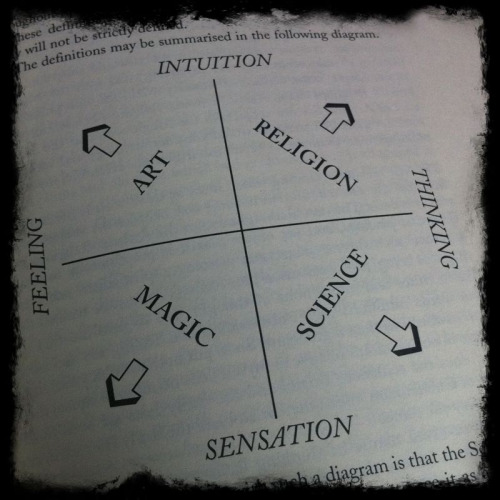
This is a key difference. It is the difference between letting a zeitgeist (spirit) move through one (without needing to understand it) and trying to move things oneself towards a desired end. For example, I might be writing this piece in order to persuade others of my point of view. On the other hand, I might simply be using words as a means to see what’s moving around inside, and coming through me, without any specific result in mind. In reality, it is a bit of both—how effective this piece is will be the only real determinant of how much my ego is preventing real “play” (and hence communication) from occurring.
Another difference is that between recognizing tyranny, oppression, etc., for what they, without making a value judgment about them, and having a personal issue with them. Ditto writing this piece: if I recognize the delusional aspect of the Occupy Movement, can I do so without feeling superior to it or seeing it as a “problem” that needs to be fixed? For Anonymous and all those who wish to approach life (including tyranny and oppression) in a similar spirit of play, the global control system is not a problem to be fixed but a worthy opponent in a great game of cosmic ping pong. The difference between the two opponents is that one side knows it's all a game, while the other side views it with deadly seriousness. When activists take their “revolution” seriously, I would argue that they are unwittingly joining the side they are opposing, because they are sharing in the same “spirit” with it.

Revolution and tyranny are twin horns of the same demon, and the proof is that, just as physical law demands, resistance makes stronger. Based on the indications of “history” (i.e., prior experience), opposing power structures only reinforces and strengthens those same structures in the long run. As exhibit A for this argument, I present “9/11” and the resulting “war on terror,” the Patriot Act, and the myriad ways in which the US (and global) government used an act of resistance to consolidate its political power, and extend the apparatus of tyranny, the same tyranny which the attack on the twin towers was (allegedly) intended to undermine.

As I see it (and admittedly having no direct experience of the protests or encampments), the Occupy Movement has two purposes. Firstly it is an opportunity for people to get together and connect in a “fun” way that beats getting fucked up on drugs and alcohol. Secondly, it is serving to widen the gulf between the socio-political power structures (and the supposed “elite” behind them, the 1%) and “the people” (the 99%) who are both subject to those structures and, paradoxically, who support them by relying upon them. As evidenced by the recent police backlash, the Occupy Movement acts to further energize the old “us and them” polarity, in both the collective and individual psyche. This is all “positive” enough in terms of enacting the Christian psychodrama of Armageddon. But is that what's really desired here?
It seems to me that the Occupiers actually want to improve their lot, and the lot of the alleged “oppressed,” and here, perhaps, is the problem. I would argue that all of us are equally oppressed regardless of our social conditions, and that to try and improve those conditions by resisting governmental corruption is like rearranging the furniture in a house that is on fire. In which case, my guess is that the children of the revolution are going to be sorely disappointed when they see that the Occupation Movement— by energizing the “enemy”— leads to the exact opposite result to that expected, i.e., to the concretization of tyranny.

I would also guess that many of the more conscious participants—on both sides—know this, though I may be wrong about that, since nothing blinds people to the truth so much as ideals. It does strike me as interesting that, despite how well-versed in esoteric concepts many of the OM-ers are, they appear to be operating under a relatively naïve, or shallow, interpretation of social change, just as if it were ordinary political structures and corrupt human beings that were running the show, rather than millennia-long collective, ancestral patterns (a.k.a. “demons”) of denial. To resort to a whopping great cliché—no change can occur externally unless it come about as a ripple-down effect of an internal shift. Occupying cities is a great diversion from the oppression of our lives, but that perhaps makes it more likely to postpone such an internal psychic shift, or “revolution,” than to bring it about.
To be clear: I am not opposed to the Occupy Movement, or to defying the “system.” It is a collective ego trip, in my opinion, but that isn't meant as a value judgment, because a collective ego trip may be just what we need right now, as a species. The only thing I am opposed to is delusion, and since I have my hands full getting past my own delusions, the reader may well ask why I am wasting my time challenging other people’s delusions. I would have no good answer to that, except to say that I enjoy challenging other people’s delusions. My comments about the Occupy Movement and all the rest are no more meaningful or important than the movement itself. They are also, to a degree, exhortations of my ego, with something deeper and more real moving around underneath them. I will say this: those who believe the Occupy Movement is part of a collective shift do not need to defend it from my “heretical” ideas, because, if they are right, nothing I say will make any difference.

But from my point of view, the whole movement is about improving conditions for individuals (and groups of them), which implies that it’s sourced in separative, ego consciousness, and that those involved are trying to enact a shift externally. As a kind of cathartic theater, it might be (somewhat) effective, but that would depend on recognizing it as theater, geared not towards reforming outer structures but towards an internal change in the participants themselves. The Occupy Movement is all part of a larger process, for sure, but so is the tyranny, and so is everything else. I'm mostly concerned that a lot of people are going to have their hopes dashed (as previously with Obama) when they realize that the nature of tyranny is that it does not give into pressure . Or at least, it never has before.
At the same time, I think it points at a much larger delusion. The idea of “human rights” is assumed by the liberal mind-set to be a progressive one. It is a given. But the idea leads inevitably onto criminal rights, animal rights, insect rights, and so on. So where does the concept of rights end? Virus rights? Bacteria rights? Disease rights? Isn’t the idea of rights a human/ego-centric concept, one with social and political significance but no wider meaning, because no equivalent in the natural order of existence? Isn’t it just another imposition of the human ego on what already is? I would argue that none of us have rights because none of us need rights.

The idea of rights being ego-centric doesn't mean it can be dismissed, however, any more than a symptom of a disease should be dismissed. My point, if any, is that the idea of human rights is part of the problem and not the solution. It stems from a very deeply-embedded idea we have in the West, the idea of entitlement, the idea that we deserve better. The only way to argue that we deserve better, however, is to argue that God/the Universe has made a balls up of things because we aren’t getting what we want. Most of us feel that way (I know I do); but to turn it into a philosophy and a rationale for social activism is to take it from mere childish pouting into the realm of hubris. There's an argument for hubris, too, of course, so once again, no value judgment is implied.... But again, if people are protesting because they believe they deserve better, that's a sense of entitlement. According to what logic do we deserve better? The answer is, according to human (egocentric) logic, a logic based on the illusion of being separate from the system, both the little system of government, commerce, and social oppression, and the greater system of life as a whole. To oppose the little system is also to oppose the greater system, to defy the gods, as it were. If we were to free our minds first, mightn’t we find that the system of oppression we exist under is exactly the way it is supposed to be, along with everything else?

Unless our idea of God is the rather antiquated notion of an outside intelligence lording it over things, then the buck must always stop with divine—the greater intelligence of the whole system—and not at any point before that. To try and blame a system or group or individual for the way things are is tantamount to saying that they/it are separate from the divine, and so they can, and even must, be eliminated for the good of all! To fight for one’s personal sovereignty or impose one’s idea of what constitutes a good or proper life on to another person or group of people = egotism. To fight for other peoples’ right to personal sovereignty = egotism + arrogance. It is true that people seem to be suffering everywhere, and that it seems like an unnecessary result of a few psychopathic scumbags abusing their power. But a seeming isn’t necessarily a reality. If we see someone dying in a gutter, rather than rushing over to help them, isn’t it wisest to ask them first if they want to be helped? They might be doing a Diogenes and consider our “help” an intrusion.
The Occupy Movement is based on value judgments about what constitutes a good society, a positive direction for humans to move in, and at least partially on the assumption that “one utopia fits all.” At the same time, the idea of what we need seems to stem largely from a reaction-response to the way things are, i.e., from resistance to an existing way of life deemed to be “unjust” and undesirable. All these occupiers may get along fabulously as long as they have a common foe to oppose and can agree, more or less, on the way things ought to be. But what would happen if that enemy (those old outworn structures) were suddenly gone? If there is a shared need to identify and oppose “the other” (corporate oppression, government corruption, etc.) which is bringing these people together, then if victory did occur, wouldn’t they need to find someone or something else to oppose? And wouldn’t they be forced to find it within their own ranks?


Once again, I am open to the idea that getting involved in protests may have a liberating effect on the participants (or at least some of them), just as playing a good game of soccer or participating in a theatrical or musical performance can be liberating (and empowering).The obvious question then is, would that still be the case if the participants accepted that the Occupy Movement was futile, in terms of bringing about social change—or even that it was eventually going to have the opposite effect to the one desired? Would the participants still be willing to engage just for the hell of it—for “lulz”? It is that spirit of play—serious play—that is the spirit of real change.
As mentioned earlier, some people believe that the Occupy Movement and its other manifestations is an expression of a “collective shift” pertaining to the coming Age of Aquarius, the sign that rules the collective. However, the shadow of Aquarius is (its opposite sign) Leo, which signifies individual sovereignty and self-expression. This would support my description of the Occupy Movement as a collective ego trip, as an expression of Leo disguised as an Aquarian movement. The shadow (delusion) heralds the coming of an objective reality, however, so it is only right if things unfold in this way. What would be a mistake would be to take the shadow for the substance, the hope/illusion for reality.

My sense is strong that, if and when a collective shift comes, we won’t have anything to do with it, and most of us probably won’t even know what hits us. It might be suggested that the Occupy Movement is laying the foundation for the shift, but I would argue that there is no foundation either possible or needed for such a shift. What there is, perhaps, is a clearing the ground, a razing, not for some utopian edifice to be constructed but for an unknown new life to burst forth, over time, from that charred land.
In the meantime, a lot of people are getting their hopes up around the movement, just as they did recently with ObaMa (OM baa). I would wager it is many of the same people, too. It's well and good for people to get out and engage with each other, and again, it makes a nice change from watching TV or bowling. It’s also perhaps a natural expression of “the masses” to revolt, so by all means let them incur the wrath of the powers-that-be so that more people can see the iron fist in action and better understand the nature of the Beast. The trouble starts when people begin to take their activism too seriously and invest, both emotionally and psychologically, in some imagined, desired (and desirable) end result. Then they are setting themselves up, not only for disappointment, but for levels of bitterness and rage which they may not be able to deal with (or express constructively, much less creatively). Ironically it is probably such bitterness and (out)rage that got many people out there in the first place; but in the end, I predict it’s that same energy which will lead many people to unwittingly join the demon-forces which they are so passionately set against. They will then be swallowed up by the beast, even as it devours itself.

While Rome burns, people may as well fiddle. All change is good. But what is oppressing us, in my opinion, is not any external structures but rather our own self-importance, our sense of entitlement in the face of a shitty world and a bleak future. It is up to us, as individuals, to let go of that pride so as not to choke on it first. I am fairly sure that, if people managed to let go of their self-importance, they wouldn’t need to protest or to do anything else besides take care of themselves and those closest to them. And if everyone did that, there’d be no need for mass movements. We might then start to see that our conditions are only and exactly what we need, collectively, that the shift, if it is to come, will happen via such conditions and not despite them, and that all any of us needs to do to change our lives is simply to let go.
No matter what sort of conditions we are living under, that’s really all that any of us can do, in any case —let go and remember how to play.


Wednesday, November 09, 2011
“You say you want a revolution – you better free your mind instead!”
Curious to note: oppressive regimes, etc, are the result of collective & individual blocked psychic energies, and therefore they are helpful to us as the means to identify an internal blockage/tyranny/oppression (mind over body, for example, or sensuality over spirituality). And so, when individuals band together to try and overcome external regimes of oppression, is that a way to symbolically enact a clearing of the channels within, or is it the means to avoid really looking at what’s going on inside and kid ourselves that we can fix ourselves by fixing our social circumstances?
Personally, I lean towards the latter POV, and YET… I am such a skeptic, or cynic, or as I like to think, a rigorous thinker, that I can’t help but wonder even if attempts to sort ourselves internally are missing the point too? The ego (constructed ID) is the only petty tyrant we need to “worry” about, and the ego runs the program of the self – so all our attempts to dethrone it are infiltrated from the start – like a King who creates his own rebellion in order to weed out the free-thinkers and destroy them.
Put more simply: if the root of our trouble, as individuals and as a society, is the illusion of being a separate entity apart from the greater intelligence system of the Universe, then the solution to that is to realize and accept that there is nothing that we can – or even need to -”do” about it, because we don’t exist as a separate volitional entity ANYWAY.
Personally, I lean towards the latter POV, and YET… I am such a skeptic, or cynic, or as I like to think, a rigorous thinker, that I can’t help but wonder even if attempts to sort ourselves internally are missing the point too? The ego (constructed ID) is the only petty tyrant we need to “worry” about, and the ego runs the program of the self – so all our attempts to dethrone it are infiltrated from the start – like a King who creates his own rebellion in order to weed out the free-thinkers and destroy them.
Put more simply: if the root of our trouble, as individuals and as a society, is the illusion of being a separate entity apart from the greater intelligence system of the Universe, then the solution to that is to realize and accept that there is nothing that we can – or even need to -”do” about it, because we don’t exist as a separate volitional entity ANYWAY.
Thursday, October 27, 2011
The Destiny Delusion
From a post I made at RS, seems worth repeating here for those who aren't following the frantics over there.
... something I was talking about yesterday with a friend which I called The Destiny Delusion (future article?) - the way in which we, our constructed ID selves, manage to get hold of (what we assume to be) elements of truth, reality, and the divine, and shape them, according to the patterns of our lower/wounded natures, into a grand destiny-design that FEELS as real, more real even, than anything we have experienced. Entheogens, for me, were a major component in creating and expanding that Destiny Delusion, whereby I became convinced of certain things about myself and my role in the universe, personal and beyond. People we meet (especially ones we fall in love with, in my experience) hook into our delusional narratives (all of which, let's face it, are founded in and filtered through an erroneous belief that we are "discreet," separate entities) and so we get married, join groups, follow gurus, start movements, write books, sing songs, and all the rest, happily building (adding our energy and attention to) a "second matrix" kind of set-up (bardo realm for the living) that keeps us from realizing the truth about ourselves and reality, preciselybecause it appears to be "ultimate truth/reality." In simple (paranoid) jargon, it's the old shtick of demons disguised as angels, luring us into hellfire by playing on our vanity. Hence the inorganics that CC describes, hooking into our patterns, fears, hopes, desires, and telling us exactly what we want to hear.
I am 44 years old and I have to face up to the very real possibility (and I think it's more than just a possibility) that my whole adult life has been a kind of wrong turn. That said, recognizing the wrongness of it may just make it the right path after all, in a strange and mysterious way, though that remains to be seen. REALLY recognizing how wrong we are goes much deeper than an intellectual concession, all the way to the marrow of our bones. It is, I imagine, a psyche-splitting axe blow from which we never recover our former sense of selves.
Obviously the idea of demons (aka patterns) tricking us into a false sense of destiny is ‘paranoid’ in the extreme, and if it were true, recognizing the truth of it would make it very difficult NOT to become paranoid, even clinically speaking. But ironically, it’s only the constructed ID (which is responsible for co-creating this diabolic delusory realm) that insists on seeing things in such black and white terms at all. It insists on imagining angels and demons as also being discreet entities, like us, and so the danger is in reinforcing the second matrix program through fear and resistance to it (the flyers feed on fear of the flyers – so ignorance to them may be the best defense the average man has, puny as it is).
Angels and demons aren’t separate beings, however, but opposite poles of a single energy-consciousness system much like day and night; and human beings are capable somehow of containing the full spectrum of awareness that spans that polarity (hence the angel and devil on each shoulder cliché). The real danger is not in becoming prey to demons, but in mistaking cold for hot, day for night, demon for angel, and responding inappropriately (insanely) to the cues. There’s nothing “bad" per se about being taken over/eaten by inorganic beings. The badness/wrongness is in the error of thinking that something else is happening than what is in fact happening. That’s delusion, and the real trouble with delusion is that it’s self-sustaining and self-propagating: when we are deluded, our mistaken assumptions cause us to act in ways that lead us ever deeper into delusion.
The first, most difficult but also essential step, is recognizing our capacity for delusion as being very nearly total, and to do that without giving in to paranoia and despair. Not-knowing (knowing that we don't know WTF is going on) is the only real ground in which gnosis can grow in, and I presume it's for that reason that gnosis always happens of its own accord, never as the result of anything we do.
Real freedom begins with not needing to understand anything before we accept it, accepting things as they are, and letting understanding come post-acceptance.
Saturday, October 22, 2011
Serpent's Promise: The Shocking Truth About Psychedelics

Stirring up the natives over at Reality Sandwich with this piece; invite you all to join the fray, if you dare.
Wednesday, October 19, 2011
The Guatemaya Rabbit Hole

Rainy season ends in Guatemaya this month, and Mitch Fraas and I are offering shaman tours of Guatemaya for cost-only (buy your ticket and pay for your expenses, and we'll put you up and show you the Mayan rabbit hole). Mitch is based in Santiago (where he will be building a house over the coming months), and I am based in Panajachel, where visitors will stay (see below)
 The guest bungalow.

Mitch's working partner is the shamanic tour guide Dolores Ratzan, who was previously married to Martin Pretchell, the well-known author (his book Secrets of the Talking Jaguar is about his time as a shaman in Santiago Atitlan).
 Dolores
 Like Pretchell, Mitch belongs to the Copre Dia, the shaman brotherhood based in Santiago whose deity is Maximon.

For more information on what a shaman tour with Mitch and I entails, go to http://www.livingmaya.com/. Mitch and I can be heard in conversation here. If interested, contact me via my profile.
Tuesday, October 18, 2011

Sunday, October 02, 2011
The Culture of Blame & the Dark Side of Marriage

Why do so many once-loving couples wind up hating the sight of each other? Why does sexual love turn into sexual hate? The reason is that when we fall in love we project all of our hopes and fantasies onto the other person, and that process has a dark side. Face it: there’s nothing more hateful than seeing all of our dreams fall apart.
What that means is that the more clearly we see the other person, the more those fantasy-projections fall apart, and the less we like it. So our experience is likely to be that, the more clearly we see the other person, the less we like them. It’s not because they are so unlikeable; it’s simply because they are their own person. They exist independently of our projections and fantasies of them. How dare they? I mean really—how dare they? So what we end up most hating about the beloved other is that they are independent and autonomous beings. That makes them a threat to us, the ultimate threat, in fact. And the more deeply we “love” them, the greater a threat they will become.

It’s all about having someone to blame. Everybody needs someone to blame. That’s the dark side of marriage. If we are unlucky enough to find someone who appears to be everything we want in life, then eventually they will become the perfect scapegoat for everything that goes wrong in our lives. They come to represent all the ways that we can’t get what we want. They become the denial of our wants.
It is a hideous conundrum, and it is one that can and does lead to murder. When it gets really bad, murder actually does seem, honestly and truly, to be the best answer. It becomes the most appropriate action for the personal self once we are faced with that hideous conundrum. If the personal self was all that there was to existence, in the end we may as well just kill the other, since all they are going to do is torment us with their autonomy and independence. Leaving doesn’t seem like a sufficiently final solution; if there is a true or “alchemical bond,” we are going to suffer even more that way. But if we kill them, destroy them completely, maybe we can be free!
Fortunately or unfortunately, there is more to us than the personal self, in fact the personal realm is really just the surface, and what torments us goes much deeper than we even know. So if that bond—and the torment it creates—continues on “the other side,” killing them would actually be the worst thing we could do. That’s the fearful symmetry of it, that what can end up seeming like the best and only solution is actually the most terrible trap we can fall into.

The other option is suicide. Ah yes: let’s send them a message they will never forget by destroying ourselves! Let’s punish the other and get free of them in one fell swoop. But this is the same non-solution solution. Picture this: Tormented by a love gone wrong, a person is trying to bring about resolution in their psyche and reach a state of peace. Who can blame them for that? The trouble is that nothing they do works. So then, if they persist in trying, in finding new things to do, things that might just work, in the end murder and suicide are, obviously, the last resorts. “I’ve tried everything, now let’s try that!” Some people, many people even, when finding themselves in that situation, might believe it’s a real solution. Not me. I know it’s not going to work, so I can’t kid myself. I can’t believe something I know the opposite of. I can believe what I don’t know, but I can’t believe the opposite of what I do know. Thankfully I am not that far gone. But it doesn’t have to be actual murder or suicide. In the less literal realms, one can murder and suicide in one's mind. In terms of sustaining the sort of energy and thoughts that fuel murder or suicide, I have been guilty.
So who’s goddamn fault is it? Is it my momma’s or dadda’s? Or is it their mommas’ and daddas’? Is it the whole human race’s responsibility? In the end, it’s everyone’s and no one’s -- except my own. I am the only one who can choose to act or not act on these feelings. Choosing not to blame is the fundamental step towards healing the wounds that are the real source of our torment. Taking responsibility means not blaming anyone, including oneself. Blame and responsibility don’t co-exist. It is irresponsible to blame people. Why? It has to do with the fact that everyone is already accountable for their actions. Because of that, the universe doesn’t need for us to bring others to account. That adds noise to the signal.
It is between oneself and what one’s knows the truth of. Facing the truth of one's self and one’s actions, that is the only account that we have to make, and it is to ourselves. We are the only ones who can see what we have done to ourselves.
Nobody does anything to anyone, really, because we are always doing it to ourselves. Whenever we hurt someone, they are just a surrogate for ourselves. So although we might be effective in making the other person feel our pain, we are still not actually doing anything to them, because we are isolate. If we were really connected, in a true sense, we wouldn’t be able to hurt each other. Living organisms can’t attack themselves; it takes a foreign element to enter in there and screw up the whole system.
So what is the foreign element? Blame. So where did it come from? It seems as though there is some element in our existence that isn’t meant to be there, that doesn’t belong, that is hostile towards our nature. It’s a paradox and a conundrum: if it was truly unlike us, how could it have access to us? How would it be able to infiltrate our system if we didn’t somehow resonate with it?
It’s nobody’s fault that blame entered the system. It just did. Forgive yourself for ever having blamed, and start all over again from there.

Wednesday, September 21, 2011
Tuesday, September 20, 2011

Friday, September 16, 2011
Cosmic Psyche

Physics only interests me, like pretty much everything else, in the larger context of psychology. And if psychology is understood as the study of the soul, then its reach potentially encompasses all human experience, including determining what we mean by "soul" or psyche.
Psychology only interests me, like pretty much everything else, in the larger context of physics . And if physics is understood as the study of the body, then its reach potentially encompasses all human experience, including determining what we mean by "body" or physicality.
It’s only by going down into subatomic particles to see how they behave that physics has begun to get to the heart of the matter: as below is *not* as above, because our idea of the laws of physics/nature is out of accord with the reality.
In the application of (Jungian) psychology, it’s only by looking outside of us – not by looking inward – that we can begin to grasp the laws of the psyche, because - surprise, surprise - as without, so within.
Physical reality is not separate from the reality of the psyche, but it has been split off from it, the result being that we now perceive ourselves as living surrounded by dead matter, and as isolate within our own self-reflected, solipsistic, inner reality of “I.”
Yet the patterns of our thoughts and feelings that weave together into identity are physical phenomena, and the patterns of events, stars, planets, and subatomic particles moving outside of us are, in kind, psychological phenomena. They are the movement of a cosmic psyche, of which we are currently but dream-fragments, thought-forms – yet nonetheless made of the same substance as the totality, hence one with it.
Wednesday, September 14, 2011
The Rules of the Game: Fate & Free Will in the Matrix
(from Matrix Warrior, 2003)

The sorcerer's set-up
“To deny our impulses is to deny the very thing that makes us human.”
—Mouse, The Matrix
The question of fate and free will is as old as philosophical thought itself. Perhaps the matrix gave us this problem to begin with so we’d spend our entire history trying to figure out what was always a foregone conclusion. Whatever we decide to believe, it is already programmed into us. As every Gatekeeper knows, the belief in free will only makes humatons that much easier to control.
To the matrix warrior, the paradox of fate and free will is as follows: as long as one believes one has the freedom to choose one’s actions, one will always be a slave to them. Humatons are confined to the matrix, a program that tells them they are free individuals precisely in order to manipulate them more easily. The moment humatons accept their fate, however, and the unpalatable truth that their acts and thoughts are determined by some outside force vaster than they can imagine, they have taken the first step towards freedom.
The reason for this is that within the matrix there are a set number of preprogrammed responses to any given situation (a situation created by the matrix itself). Whichever one of these a humaton chooses (under the programmed illusion of having a choice), he or she is always only acquiescing to the program. The matrix is like a chess player that has already anticipated every last one of its opponent’s moves—except one. The only way to escape the program is by acting entirely outside the rules of the program. The rules of the program are the rules of reason, of the rational mind. Thus the matrix warrior knows that the only freedom within the program is to act irrationally. This is not to say insanely or foolishly, but rather spontaneously, unpredictably, and above all without personal motive. Here is where the imagination and will come into play. Since the matrix can only imitate and anticipate the processes of reason, any act of the creative imagination is outside the parameters of its comprehension, and will always come unexpected. And since will is precisely what humatons do not have (having been drained of it by AI), the one response that they are almost guaranteed not to give is that of will, the imaginative response. It is this response which is the warrior’s one true option within the matrix. By choosing to have a choice (i.e., to override the program), matrix warriors effectively have no choice, save to act spontaneously and do the one thing that is unexpected of them. To be impeccable, warriors must always follow this inner imperative, that of freedom.
The inner voice of the matrix warrior is a simple but extremely tricky affair. Since warriors know that every last one of their thoughts originates in the matrix program itself, they must learn to ignore their thoughts, to tune them out until they become a sort of background hum, an irrelevant but relentless nag. Long before they attain a lucid state of internal silence, matrix warriors must practise diligently, every moment of their lives, discriminating between their thought-responses so as to isolate this inner voice. Once they have rejected every last one of the false thoughts of the matrix mind, whatever impulse or intuition is left is the one they can trust in. Accordingly, it is the one they act upon. In other words, the only appropriate action in any given moment for the matrix warrior is the unthinkable action, the one that arises from the silent emptiness, behind and beyond all the senseless chatter of the matrix data-feed. Thus, it is a truism to say that matrix warriors are impeccable because they are irrational, and because they dare to do the unthinkable: to act without prior thought or motive.
By continuing to act in this non-rational, spontaneous manner, the matrix warrior constantly confounds the program. The matrix is unable to assimilate the warrior’s choices or to respond adequately to them, just as a sane person cannot hold a conversation with a madman without losing the thread. And so, little by little, the matrix begins to lose sight of the warriors, to loosen its hold on them, and warriors in turn become progressively freer to heed their inner voices and to act spontaneously. Yet, so long as they remain within the matrix, warriors remain caught up by their fate. They cannot change the components of their lives, nor in any radical fashion the events and circumstances that shape them. What they can do is to refine their responses to the events and so alter the manner in which they occur. In this way, by accepting their fate, matrix warriors are able to accelerate the program, as it were, and move through the programmed events in a faster, more economical and empowering manner. After a time (most especially once they connect to the 2nd attention sorcerers in the real world), they are able to see their fate, laid out before them like a map or a blueprint. They can then work within it, without ever being restricted by it.
With great power comes great responsibility. Responsibility is the ability to respond, and this is the only freedom warrior/sorcerers can ever have within the matrix: the power to respond freely to whatever comes their way. Through such a power, warrior-sorcerers begins to transform their world and the matrix turns gradually from torture chamber to playground. Seeing as the matrix program is hardwired to warriors’ own unconscious will, the fate which AI has assembled for them consists of elements drawn from their sleeping minds, elements that must accordingly fit their particular needs as individuals. Even though the matrix has shaped their personalities from birth, it stands to reason that, since AI cannot actually create anything (lacking the imagination to do so), it can only shape and mould what already exists. So each individual’s life-plan, their fate, is actually assembled only partiallyin advance, but mostly through the process of being ‘lived’ (i.e., dreamed). The matrix provides a nearly infinite series of choices, and individuals, from birth onward, select which ones best meet their needs; these ‘choices’ in turn give rise to the events and circumstances of their lives. So although AI may be able to foresee every last one of the countless possible ‘fates’ for any given individual, it cannot know which precise fate will be realized. Logically, the longer humatons remain within the matrix (the longer they are plugged in), and the more rigidly they keep to its dictates, the easier it becomes to predict their fate, to the point that most humatons, by the time they reach adulthood, have their lives entirely mapped out, preordained. The only possibility of breaking out the pattern, then, is via intervention from matrix sorcerers coming from left of field, from outside the matrix program. In just such a way, Morpheus intervenes in the life of Thomas: to make him an offer he can’t refuse.
*
 Le Regle du Jeu
To return to the original question, matrix warriors know that, although their various fates are all preprogrammed, there is a nearly infinite variety of them, and that they are all contingent upon, drawn out of, their own unconscious mind. They are dreaming their lives, and their primary advantage over other humatons is that humatons never realizes they are dreaming, while warriors become aware of this by steady degrees. Humatons never recognize the option of becoming lucid, and so they allow the matrix to make all their choices for them (they are not the dreamers but merely figments of the dream). Matrix warriors strive to become conscious of their unconscious processes and tap their creative imagination, their will—in order to have an active say in their fates. By becoming aware of the actors at play, it becomes possible for them to meet and respond to the events in their lives in a more lucid, controlled, spontaneous, and imaginative fashion, thereby using events constructively, towards their own freedom. By accepting their fate, warriors turn the matrix’s own devises against it, and begin to discover their destiny. Warriors, rather than trying to change their fate, seek to accelerate it. If they can bring about all the events that their unconscious mind has provided for AI to work with—and above all if they can turn these events from distractions and inhibitions to actual instructions—they are able to exhaust the program’s possibilities (to complete its purpose); at this point they may begin to introduce, through conscious will, new possibilities all their own. It is now that the 2nd attention begins to seep through into the warrior’s life, fate segues into destiny, and the imagination takes over from the intellect. Will (imagination) overthrows reason. And it is at this point that the rules begin to change. The matrix sorcerer has freed his mind.
The question remains: how much can matrix sorcerers actually alter their lives from outside the matrix, in the 2nd attention? It seems unlikely that they have the power to reprogram the matrix or to shape events within it, since only ‘the One’ can do this. If matrix sorcerers did have such a power, they would have nothing to fear and could end the whole game simply by programming everyone to wake up. It also seems logical that, the more hacking they do, the more they are likely to draw the attention of the Sentinels (the search and destroy machines) in the 2nd attention, as well as the Gatekeepers in the matrix. Hence, discretion is the better part of valour in the war against the matrix, for the sorcerer as much as for the warrior.
Interestingly enough, this restriction also applies, and maybe even more so, to the Gatekeepers. The Gatekeepers are obliged to act within the rules of the program, because a computer program needs to be consistent in order not to fall apart. It may be that the Gatekeepers cannot afford to break too many rules too often, because then the rules would cease to hold up. Since the matrix is based upon a rational and strictly limited (and limiting) interpretation of reality, any acts or events that are too far outside such an interpretation would threaten to destroy it entirely, or at best cause it to mutate. Humatons would start to stir in their slumber if they were witness to too many marvels. So matrix sorcerers and Gatekeepers alike must walk a razor’s edge in which their magical acts and impossible leaps are as likely to work against them as they are to further their cause.
By performing impossible feats inside the matrix, Neo and the others can let humatons see ‘what you [AI] don’t want them to see: a world without rules’. This way, matrix sorcerers can awaken humatons to their own possibilities. Even more dramatically, by introducing new responses, new options, into the program, they are causing it to mutate, creating new rules and possibilities and so reshaping ‘reality’, redesigning the program, towards the eventual end of cancelling it entirely. On the other hand, if they draw too much attention to themselves, they will be open to reprisals from AI. Since the Gatekeepers can manifest through any plugged in human whatsoever, and since they can monitor all events within the matrix through the humatons, any outré phenomenon the sorcerous crew perform will quickly bring the Gatekeepers to them. The matrix program will rise up against them, including, let's not forget, those ‘hopelessly dependent’ humatons who will fight to protect their sense of reality. Matrix sorcerers are restricted not by any inherent limitation of their powers, but rather by the limitations of the 1st attention itself. If they stir things up too much, mutating their fates and accelerating the program, they will find themselves faced with more than they bargained for. To this end, they are careful to transform their lives within the matrix a little bit at a time, gently, frugally, with patience and cunning, and above all with a carefully drawn strategy. After all, they have nothing to gain by rushing, and everything to lose by overreaching themselves.
Since the active element in the lives of matrix sorcerers is no longer their reason but their will, and since will manifests spontaneously and non-rationally, there is no longer any way for them to predict their own actions, much less the outcome of them. A matrix sorcerer can have no goal, as such, save the goal of total freedom and complete transformation, a goal as mysterious as it is apocalyptic. Matrix sorcerers are concerned only with the moment, not with yesterday or tomorrow. Time is an illusion, like everything else only more so. Matrix sorcerers are like card sharps who win every time without ever having to cheat. They don’t need to cheat, because like idiot savants they can memorize the movement of every single card, and know exactly which one will come up next. They know not only what their next hand will be, but what everyone else’s will be too! The only thing they can’t control is where the cards will fall; but seeing as the bluff is as much a part of the game as anything (to the card sharp, there’s no such thing as luck), this is of little consequence to the matrix sorcerer. Whatever cards they are dealt, they know how to play them. That’s fate and free will in a nutshell: no one chooses what hand he is dealt; only the matrix sorcerer is free to decide how to play it.
Matrix sorcerers manifest their destiny out of the raw material of their fates. They know exactly what they want and how to get it, because they know that the only way to get what they want is not to want it. And since they don't give a fig either way, they can always bluff their way through, no matter how lousy the hand they are holding may be. Not caring if they win or lose gives sorcerers the calm and the confidence of winners, and so they win every time. In just such a manner, matrix sorcerers handle the elements of their fate and shape them into an enviable destiny. It’s all the same to them if there’s air or not: they don’t need lungs anyway.
This in-the-momentness spontaneity of sorcerers is the key to their power and freedom both. The matrix program is upheld by the code of reason, of language-based, rational thought. This is what gives sequence to the events and beings that appear to exist within it. Sorcerers have unplugged from the matrix through disconnecting from their own rational thought processes, by shutting off their internal dialogue, their false ‘minds’, and attaining a state of inner silence. It is from this state of silence that the will, the imaginative-creative faculty, emerges. This is a most salient point. It is inner silence that makes matrix sorcerers different from their fellow humatons. Even matrix warriors who have yet to unplug are still trapped by the dictates of their fate, of the ‘program’. The matrix sorcerer is outside looking in. The sorcerer’s art is in his or her power to imagine, the capacity for creative thought. Sorcerers ‘think’ in images rather than words. Above all, they act without thinking. By forbearing from rational thought immediately before acting, their acts break the rules of the matrix and upturn the program. The matrix is designed to monitor, direct, and control human thought and so to anticipate every action. From the most trivial to the most revolutionary, all are part of AI’s spectrum and within its power to influence. When matrix sorcerers act, however, they acts impulsively, spontaneously, and without accompanying thought. This makes their acts appear irrational, and come wholly unexpected. It is precisely this that makes them truly creative, and therefore beyond the matrix’s power to counteract.
This is what Morpheus means when he tells Neo to free his mind: to let go of the desire to analyse, interpret, judge, and control what is happening, and simply allow his will to unfold, magically, without interference from reason. Once he is able to do this, Neo’s actions become sorcery. By silencing his thoughts and so becoming disengaged from the matrix, he has tapped his will. The only freedom for matrix sorcerers is to act without knowing what they are doing, to become a witness to their own acts, a midwife to miracles, a true creative force of nature, outside time and space, and beyond the reach of the Gatekeepers.

Sunday, September 11, 2011
Thursday, September 08, 2011
The End of the World: When, What, and for the Love of God, Why?!!

Perhaps the “end of the world” is no more nor less than a species coming of age, a shamanic rite of passage which only individuated psyches will be prepared for? That is, those individuals who have owned their personal shadow and established an INNER sense of the real, outside of external/collective definitions and values (the group mind). Since it would be the end of the unwritten “consensus” which agrees that reality is outside of us, for those whose only reality is outer and not inner-generated, it will be very much the end of the world.
This may be an evolutionary process – consensus reality/the group mind being the matrix-chrysalis-womb that allows the fetal consciousness of humanity to come to term. Leaving that matrix-womb would be every bit as terrifying and unfamiliar as leaving the first womb was to us, and every bit as wrenching. The group mind, like the mother’s body, provides us with a sense of comfort, familiarity, safety, and identity; as such, we depend on it just as much as an unborn fetus depends on *its* environment.
Leaving the group mind would be akin to death as well as birth: cast into an unknown realm in which we have no choice but to generate reality from what we have within us. Human consciousness would then change its spin – perhaps overnight?! – from passive reception to creative transmission. Surviving that apocalyptic transition will depend entirely on the degree to which we have integrated and “owned” our individual inner (shadow) content, because otherwise we must face it outside of us. . .
This is such a complex question, and of course it's what everyone wants to know. But there may be an even more complex question, relating to how much our focus on external "events" and our adherence to a linear timeline might be keeping us in the fetal-consciousness of consensus reality, and thereby preventing the "event" from happening?
Suppose it has already happened, and we are simply reliving all the events leading up to it, in that final, definitive moment of species death/birth? For me, the question is always personal/individual - where am I situated in myself/my own evolution? And when, if ever, will I break through into a fully REAL-ized, individuated/liberated state of being? When, Oh Lord, when?
I think that's all we need to concern ourselves with (if that!), and yet, paradoxically, since our outer environment, local and non-local, mirrors our inner state, it pays to keep a close watch on our world also, as a way to gauge where we're at.
The idea of "the end of the world" strengthens the idea of the world; the idea of the dissolution of the ego, strengthens the idea of an ego. Yet neither the world nor the ego exist, really, as a fixed or final reality, outside of our agreement to perceive them as real.
So then the idea of a collective species awakening, etc, strengthens the idea that we are part of a collective. This is both good and bad, probably, because it is both true and not true - it's an idea that is becoming true on the one hand, and which is truer than we dare face up to, on the other. I think we are currently caught in the shadow of the idea of being a collective. The group mind (Piscean age, womb, matrix) is giving over to the Aquarian (Promethean) awakening to the reality of our utter aloneness and isolation, a necessary crossing of the Abyss that will give rise to individuated solar beings which can then, but only then, come together and form a tribe - a collective being which is perhaps infinitely more heart, and body, than "mind"?
Getting to the nuts and bolts of this question, I have long "intuited" (never sure where it comes from, maybe wishful thinking) that 2012 would be "the beginning of the end." For the Maya it is when the old systems begin to collapse and give over to a new way of being/perceiving. To my mind that entails a full recognition of the nature of our predicament, and hence is when the machinery of the shadow begins to emerge into concrete expression. A truly terrifying time is ahead of us, I believe. That shadow machinery would then be fully manifest by 2017, at which point some sort of external intervention would occur. (What's that Joe Campbell said, about only finding the light in the deepest shadow?) However, this is probably an optimistic scenario, as it looks to me like it's going to take more than five years for a whole species to be fully confronted with its shadow. But I optimistically predict it for myself, at least! : /
It's like an end game theater of higher and lower self (and yet the lower self is the deeper self, is the higher self!): we first have to see what we have turned ourselves into, as a species, and experience the full, horrendous truth of our complete enslavement to our lower natures. Whether this enactment entails environmental chaos or tyrannical government oppression, or both, or some unimagined factor, remains to be seen. But only then - in the deepest part of our own shadow - will we see what we really ARE. Enter the Other, divine or extraterrestrial emergence, which comes from within, and yet, mysteriously and magikally, intervenes from without.
Saturday, September 03, 2011
Friday, August 12, 2011
Wednesday, August 10, 2011
Telepathy, Trance, Dreams, Trauma

PART THREE
“Authors, the scene ends
with a rule of theater:
In the beginning was the mask.”
—Antonio Machado
The Magikal Mirror
“Writing, I think, is not apart from living. Writing is a kind of double living. The writer experiences everything twice. Once in reality and once in that mirror which waits always before or behind.”
—Catherine Drinker Bowen
Keeping a journal and performing a magical ritual might seem worlds apart, but there may be a common intent to both these activities. In the same way as we can bring aspects of our psyche to consciousness through writing, a ritual magician assumes certain roles with a desired outcome, embodying the god Mars in preparation for conflict or the goddess Venus in anticipation of love. By such archaic practices, the ceremonial magician is awakening parts of his (or her) psyche which he wishes to embody and integrate into his persona. In a similar way, a shaman dons animal skins as a means to summon “spirits” which “dwell” in his psyche and in that of his audience (or client): he or she is invoking (and evoking) the primordial forces by acting out a specific part of the group psyche, as a means to integrate it. This is analogous to group therapy also, when a ritual space is created within which normal social rules are suspended. This ritual space—be it the journal, the therapy room, the shaman’s hut or the magician’s circle—allows “the inexpressible to be expressed.” As already described, communicating with ourselves in this way develops our ability to communicate with the world. Then, as we begin to bring this new awareness and maturity into our interactions with others, so communicating with the world deepens our relationship to ourselves.
There is a well-known magical oath: “I pledge to treat every phenomenon as a particular dealing of God with my Soul.” While based on the metaphysical belief that the Universe is a “magical mirror” which constantly reflects back at us the internal conditions of our souls, this oath also sums up the tenets of existential psychology, as encapsulated by Carl Jung’s statement: “When an inner process cannot be integrated it is often projected outward.” On the individuation journey to self-knowledge, there are inevitably aspects of our consciousness which we are either unable to see or unwilling to look at in isolation. Just as there are gods which the magician is careful not to invoke until ready, there are subjects which we choose not to write about in our journal, often because we aren’t ready to even think about them. Once we enter into interaction with other people, however, these are the very aspects that get stirred up. They are the rough (and blind) spots which sooner or later are going to trip us as we begin to engage with our environment in new ways. It is this pressure of interacting with other people that brings home the discord in our psyches and allows us to work it out. This tension provided by “the other” is essential to individuation, and it is why, “beyond a certain point, the whole universe becomes a continuous process of initiation.”[i]
Between the Lines: Induced Trance States Via Reading & Writing
“Telepathy, of course. It’s amusing when you stop to think about it—for years people have argued about whether or not such a thing exists, folks like J. B. Rhine have busted their brains trying to create a valid testing process to isolate it, and all the time it’s been right there, lying out in the open like Mr. Poe’s Purloined Letter. All the arts depend upon telepathy to some degree, but I believe that writing offers the purest distillation.”
—Stephen King, “What Writing Is.”
Increased self-awareness equals maturity, making individuation an exponential growth curve. Maturity and self-awareness increases our capacity to observe ourselves, not only in others but in isolation, and this capacity for self-observation further increases self-awareness. The tension created within us by the presence of the other then allows for a new seeing within ourselves, because the other is always reflecting something we can’t or won’t see about ourselves. That newly gained insight is what we bring to our next relationship, and so on. The paradox of individuation is that, as we deepen self-awareness, it is as if we are cleaning the universal mirror within which we are gazing, so life reflects back at us ever more sharply our internal condition. The result is seemingly counter-intuitive: we become not less but more (and more) sensitive and vulnerable to both internal and external triggers the more we mature, because as we continue to integrate the contents of our unconscious, it begins to seem as though the whole world is happening inside of us. It also becomes harder and harder to distance ourselves from others, because we are taking responsibility not only for our own thoughts, feelings and actions, but for everyone else’s too—though only in relation to ourselves—and so everything that happens lands at our doorstep. The closest parallel to this ongoing initiation would be that of a lucid dream state, because in dream states isolation and interrelationship co-exist: we are both alone in our “head-space” and interacting (telepathically, astrally, or by means not yet understood) with the world outside us. This is why it is possible to unravel psychic knots while dreaming, which provides a direct parallel once again with both reading and writing, since both activities (when immersive) recreate a waking dream state.
The following is from Stephen King’s On Writing:
“My name is Stephen King. I’m writing the first draft of this part at my desk (the one under the eave) on a snowy morning in December of 1997. There are things on my mind. Some are worries (bad eyes, Christmas shopping not even started, wife under the weather with a virus), some are good things (our younger son made a surprise visit home from college, I got to play Vince Taylor’s ‘Brand New Cadillac’ with The Wallflowers at a concert), but right now all that stuff is up top. I’m in another place, a basement place where there are lots of bright lights and clear images. This is a place I’ve built for myself over the years. It’s a far-seeing place. . . . you are somewhere downstream on the timeline from me . . . but you’re likely in your own far-seeing place, the one where you go to receive telepathic messages. . . . And here we go—actual telepathy in action. You’ll notice I have nothing up my sleeves and that my lips never move. Neither, most likely, do yours. Look—here’s a table covered with a red cloth. On it is a cage the size of a small fish aquarium. In the cage is a white rabbit with a pink nose and pink-rimmed eyes. In its front paws is a carrot-stub upon which it is contentedly munching. On its back, clearly marked in blue ink, is the numeral 8. Do we see the same thing? We’d have to get together and compare notes to make absolutely sure, but I think we do.
“This is what we’re looking at, and we all see it. I didn’t tell you. You didn’t ask me. I never opened my mouth and you never opened yours. We’re not even in the same year together, let alone the same room... except we are together. We’re close. We’re having a meeting of the minds.”
Stephen King makes no mention of mirror neurons or brain states; back in 1997 no one was talking about such things. Yet he is essentially describing the same phenomenon: transference of thought via writing. It’s interesting that King takes the time to describe his brain state (his mood), even though it has no apparent bearing on the scene which he goes on to transmit (the rabbit in the cage), telepathically, in order to literally illustrate his point. The reason it’s interesting is that the science of mirror neurons argues that it is just such “between the lines” information that is transmitted via language—the writer’s mood and current circumstances—even when they are in no way inferred by the written or spoken material itself.
What King is describing here is more than simply a shared visualization, because the act of visualizing—being obviously linked to dreaming—is one that entails at least a minor trance state. We all know what it is like to get sucked into a good book. We get lost in the writer’s (and/or the characters’) thoughts and feelings, immersed in another world being created by a combination of words on the page and our own ability to weave a surrogate dream reality inside our skulls (or bodies, if you want to be holistic about it). One thing is certain: when we are carried away by a good book, fiction or non-fiction, we are only secondarily aware of reading words on a page; our primary awareness goes where the words themselves take us. And where they take us, as King points out, is not only into our own minds, but into the mind of the author. It is a matching of brains states, a shared trance. And (though this is trickier to prove) I’d wager that the closer the author was to deep dreaming when she or he wrote the book, the closer we can approach to such a state ourselves while reading it. This is what distinguishes great writing from not-so-great: the degree of immersion it induces in us is determined, at least in part, by the degree of immersion which the writer attained while writing it. This is what communicates—“between the lines.”
Reading James Joyce is a very different experience to reading Elmore Leonard, and Jean Baudrillard requires an alternate sort of attention to Stephen King. Some prose is harder to get “our heads around,” and while this may have to do with obvious factors such as dense vocabulary or labyrinthine phrases, it may also be dependent on how foreign or alien the brain state of the author is compared to our own. People who work hard to match Joyce’s brain state “get” what he is doing and consider him a genius. For the rest of us, he is incomprehensible and overrated. (Ditto Baudrillard.) The same is true of our dreams: the ones that more closely match our waking brain state are easier to remember, understand, and describe. Others are so “out there” that just thinking about them causes us a mild form of distress due to cognitive dissonance. (The Surrealists were all about creating cognitive dissonance, and their aim was to try and match dream states through their use of word and image.)
If you read the following sentence, allowing that forensic science has a relative ownership of the sort of cheese waffles which your mother baked, for the sake of literary analysis you will take the next number 5 bus and wind up looking for missing punctuation marks. On the other hand if I say simply that this sort of playful writing has a pleasingly disorientating effect on the mind, you will be then relieved to be back on safe ground, and that matching the author’s brain state does not entail coming too seriously unhinged from your own familiar worldview. Coherence is something we let go of only with a struggle. The point is, while you are reading this, you are going along with my own thoughts and as long as these seem to follow a linear sort of sequence common to waking logic, and to stick to ideas reasonably familiar to you, you can keep up and won’t have too hard a time of it. The moment I bring in salivating leprous homunculi and suggest that your mother’s panties are the secret to your wasted sex life, you will either laugh, become incensed, or try and figure out where exactly you lost the thread of my argument.
See what I mean?
PART FOUR

Lucid Dreaming & Original Trauma
“Learning to think without resorting to images is indispensable to alphabet literacy. ‘Make no images’ is a ban on right-brain pattern recognition. All who obey it will unconsciously begin to turn their backs on the art and imagery of the Great Mother and, re-orientated a full 180 degrees, will instead seek protection and instruction from the written words of an All-Powerful Father.”
—Leonard Schlain, The Alphabet Versus the Goddess
Matching the author’s brain state is something that happens automatically with “easy” prose, but which we become increasingly aware of having to do when the prose is more innovative and challenging, or conversely, sloppier and less cunningly structured. Yet the awareness of the reader is finally the determining factor in how efficient the conveyance of information is. If a tree falls and no one hears it, there’s no sound, and a book that is never read does not exist as a form of literature, only an object on a shelf. Telepathy has not occurred: minds have not met. Compare this to our dream lives. How much of the material of our dreams ever makes it to our conscious minds? Yet it is there: book after book, story after story, just waiting to be tapped into and enjoyed.
In the common view, dreams are a way for our brains to “work off” excess stress or work out unresolved issues. In the jargon of our day, the dream state is a place where the unconscious “uploads” data—in symbolic language—about the condition of the “network,” our total psyches. This can be transpersonal as well as personal because the unconscious is collective as well as individual. While sleeping, we are in a relatively egoless state, and because of this, information that would otherwise be threatening to, and hence repressed by, our waking consciousness can be addressed and integrated. When I say “relatively egoless,” I mean that our everyday concerns no longer hold sway over our choices. Barring specific anxiety dreams, we aren’t worried about the rent or what the neighbor thinks of us, but tend to get caught up in symbolic enactments that make little or no sense in the context of our waking lives.
If we think of ego in its pure sense, however—that of an individual perspective with its own focus and drive—it could be argued that, potentially at least, we are more in our ego while dreaming, because when we sleep our ego and id (conscious and unconscious minds) are functioning much more as a unit. This becomes particular apparent in lucid dreaming, and once again the parallel with writing is clear: lucid dreaming is a way of taking control of the components of our unconscious and writing the dream. Like a scenarist, a novelist, or a scriptwriter, our intent is to arrange specific elements of our unconscious in a conscious or semi-conscious fashion, in order to discover how best they fit together and create a meaningful narrative. This is the similarity; the difference, of course, is in the medium employed. When we sit at a desk and write, we are using words to describe internal states and are willingly entering into mild trance in order to best midwife that psychic material into the new form, that of literature. When we dream, on the other hand, something else happens, and words are only incidental to that mysterious process.
When we write we are creating an external vehicle for ourselves as consciousness: a book, a poem, a short story, an essay. This is called self-expression, and it’s a process which most writers would say they have control over, if not total control then near enough. (Writers often say that when it’s working, the story or piece takes over; but never, I assume, to the point they would forget to eat and starve to death.) When we dream, such control is drastically reduced, to the point that most of the time we forget that we are dreaming. The world we create becomes all-embracing. When we dream, we are “projecting” consciousness outside of the “self” and creating an image, then stepping into the image and interacting with it. Anyone who has ever fallen asleep and entered into dreaming consciously (the hypnopompic state) will have observed that critical moment when ordinary thoughts begin transform into and appear before us as images. This is the act of creation stripped down to its essence, and the essence of the creative act is that (unlike writing) we have only a rudimentary kind of control over it. Falling asleep in this way can be extremely jarring (the trick is not waking ourselves up by reacting to the images we see); it is like tapping into a well of psychic energy that for the rest of our lives is turned off and unavailable to us. Writers—and all artists—attempt to tap into this wellspring consciously, while awake, and to direct it into a finished work which they can present to the world as “the product of their imagination.” Yet it may be that the product itself is almost incidental to the real mystery, that of the creative process itself. How does it happen and why does it take the form it does? What are these seemingly bipolar kinds of consciousness called waking and dreaming, and why is it so difficult (and so fascinating) a task to create—or locate—a working bridge between the two?
It’s been said that the original sin was projection[ii]: a split in consciousness between inner and outer by which we were cut off from the divine, expelled from Paradise. On the other hand, with no projection of consciousness outward, would there be anything for consciousness to interact with? Perhaps it wasn’t a sin until we mistook the projection for ourselves and got lost in the dream? Perhaps all of these practices—magic ritual, shamanic trance, lucid dreaming, meditation, psychotropic plant use, and writing—are ways to re-enact the original manifestation of consciousness into (and as) matter? Maybe they are tricks to remember how we tricked ourselves, as consciousness, into getting lost in a language-based reality construct? In which case, are they also ways to reverse “the Fall” by reenacting the primal trauma—what Philip K. Dick described as “a primordial split in the godhead”—and heal the rift between waking and dreams?
Subscribe to:
Posts (Atom)
